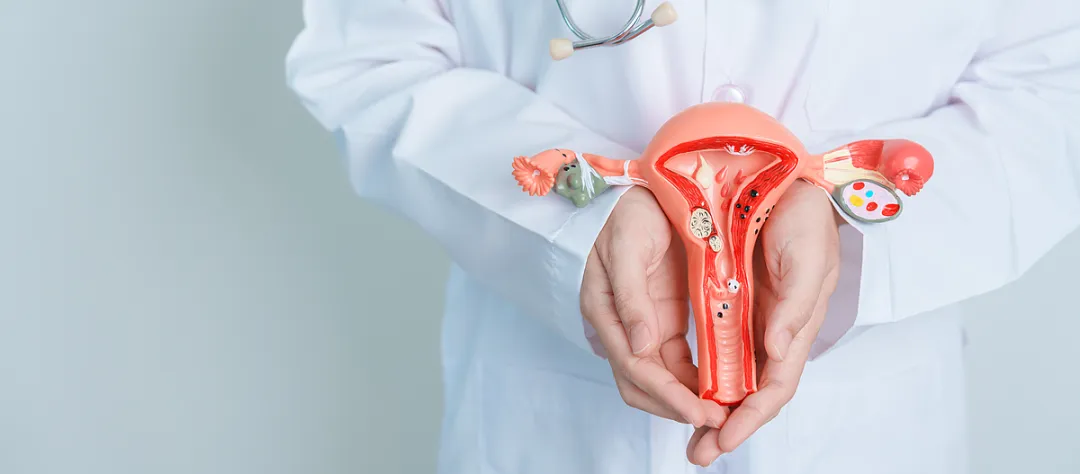
The Patient: A Routine Exam That Changed Everything
Early 20s, unmarried, nulliparous, severely obese
9cm anterior intramural fibroid with partial subserosal projection
Enlarged to roughly 10-week pregnancy size
Young patient; fertility preservation and cosmetic outcome were priorities
Xiaorui, a woman in her early 20s, had always thought her lower belly was simply a result of weight gain. She was young, active, and had never experienced heavy periods or significant pain. When a routine physical exam included a pelvic ultrasound, neither she nor her family expected anything unusual.
The result was startling: a 9cm uterine fibroid, with her uterus already enlarged to the size of a 10-week pregnancy. Her severe obesity had masked the abdominal mass, making it difficult to notice by appearance or touch. Because she had never had regular gynecologic screenings, the fibroid had been allowed to grow undetected.
"I always thought fibroids only happen to women in middle age. Do I really need open surgery? And if I haven't had children yet, will I be left with a long, ugly scar?"
— Xiaorui, upon receiving her diagnosis

Uterine Fibroids Have No Age Limit
Under the care of Professor Sun, a senior gynecologic specialist at AMCARE, Xiaorui learned that uterine fibroids are not limited by age. Hormonal fluctuations, excess body weight, and irregular routines can all promote fibroid growth. Regardless of age or sexual history, adult women should undergo annual gynecologic exams — including pelvic ultrasound — to catch problems early.
Because Xiaorui had never been screened, elevated hormone levels during her reproductive years gave the fibroid the ideal environment to grow. By the time of diagnosis, it had already crossed into the category of a "giant fibroid."
What is a "Giant" Uterine Fibroid?
While no single international definition exists, a fibroid is generally considered "giant" when a single tumor reaches 8–9 cm in diameter or weighs ≥800 g. Xiaorui's 9cm fibroid clearly fell into this high-risk category.
Because of her age and desire to preserve fertility, open surgery was not ideal. It carries a larger incision, longer recovery, and a more visible scar. Instead, the team recommended a transumbilical single-port laparoscopic myomectomy (LESS-M) — a minimally invasive technique that uses the navel as the single entry point, hiding the incision within the natural fold of the belly button.
Three Challenges: Anesthesia, Bleeding, and Surgical Access
Professor Sun had performed thousands of single-port laparoscopic procedures, but Xiaorui's case still presented significant technical challenges.
Challenge 1: Difficult Airway
Severe obesity increases the risk of difficult airway management and ventilation under anesthesia. Dr. Li, the anesthesiologist, conducted a thorough preoperative airway assessment and prepared backup equipment including video laryngoscopy and laryngeal mask airway to ensure safe intubation.
Challenge 2: High Bleeding Risk
Large fibroids are associated with richer blood supply and greater intraoperative bleeding. The team used preoperative medication to shrink the fibroid from 9cm to 7cm, reducing surgical risk and blood loss.
Challenge 3: Single-Port Access
All instruments must pass through one 2cm incision at the navel, creating a narrow workspace and increasing instrument collision. During surgery, the fibroid was found to be firm and tightly adhered to its capsule, with blurred boundaries. Careful dissection was required to protect the uterine muscle and preserve fertility.
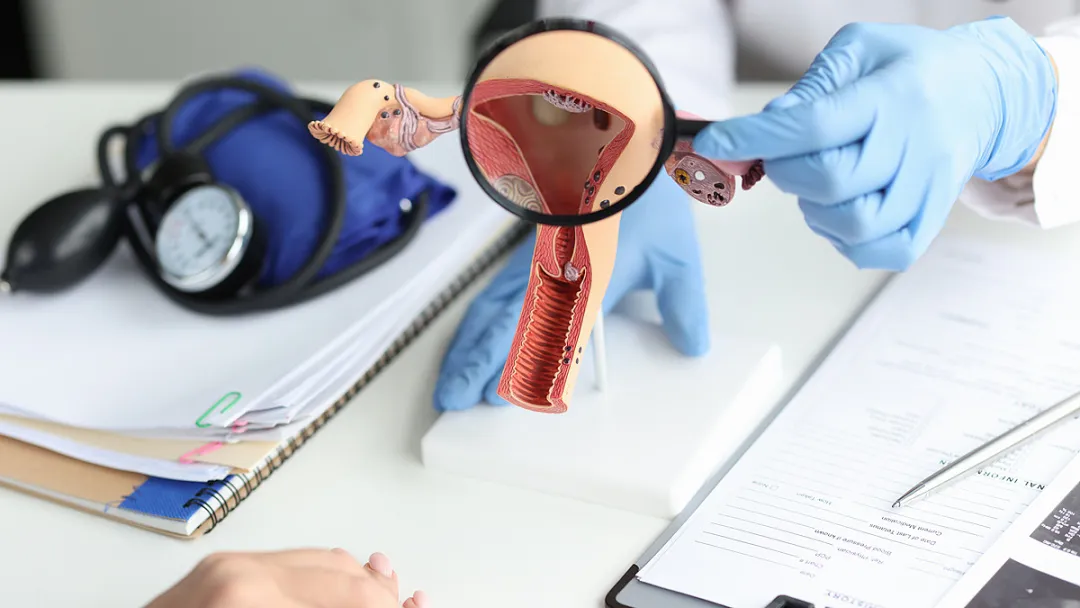
Surgery: Complete Removal, Hidden Scar
During the procedure, Professor Sun — assisted by Dr. Shi and Dr. Wu of the AMCARE gynecology team — carefully fixed the fibroid, incised the capsule layer by layer, and dissected while simultaneously coagulating blood vessels to maintain a clear field. The fibroid was removed completely, and the uterine wall was reconstructed with layered continuous sutures using fishbone-pattern absorbable sutures.
Throughout the operation, the anesthesiologist continuously adjusted anesthesia depth, monitored vital signs, and maintained stable circulation and respiration. No active bleeding occurred during the procedure.
| Step | Action | Purpose |
|---|---|---|
| Preoperative | Medical shrinkage of fibroid from 9cm to 7cm | Reduce bleeding risk |
| Access | Single 2cm incision through the umbilicus | Hide scar in natural fold |
| Dissection | Layered capsule incision with vessel coagulation | Clear visualization and hemostasis |
| Reconstruction | Fishbone-pattern layered sutures | Restore uterine integrity for future pregnancy |
| Protection | Anti-adhesion barrier placed over wound | Reduce pelvic adhesion, protect long-term fertility |
| Removal | Fibroid removed through specimen bag via umbilical incision | Complete specimen extraction |
The transition from fear to confidence came from knowing that protecting the uterus and future fertility was possible — through precision technique and a team experienced in the most demanding minimally invasive cases.
ERAS Recovery: Addressing Obesity-Specific Risks
Following Enhanced Recovery After Surgery (ERAS) principles, the AMCARE team tailored a personalized plan for Xiaorui, focusing on the elevated risks associated with obesity.
Early Mobilization
Obesity is a major risk factor for deep vein thrombosis and pulmonary embolism. Xiaorui was encouraged to walk 2 hours after surgery, with regular leg movement, compression therapy, and preventive anticoagulation.
Multimodal Pain Control
Preoperative preemptive analgesia, central anesthesia, local infiltration of bupivacaine liposome at the incision, and long-acting postoperative pain medication kept discomfort at acceptable levels.
Modified Preoperative Preparation
Instead of traditional fasting and bowel preparation, ERAS allows small amounts of clear fluids up to 2–3 hours before anesthesia. This reduces hunger, insulin resistance, and protein breakdown, promoting faster recovery.
Comprehensive nursing care addressed wound management, pain control, nutrition guidance, and psychological support. The day after surgery, Xiaorui met discharge criteria and returned home. On day 4, Dr. Wu called for follow-up; Xiaorui reported no pain or discomfort, and only a small dressing remained at her navel.
"I'm so glad I chose the right doctor and the right procedure. I can get back to normal life quickly — the anxiety and fear are completely gone."
— Xiaorui, 4 days after surgery
About Uterine Fibroids
Uterine fibroids are the most common benign tumors of the uterus, affecting up to 70% of women during their reproductive years. About 30% of women with fibroids develop symptoms requiring treatment, including heavy menstrual bleeding, prolonged periods, pelvic pain or pressure, infertility, and urinary or bowel symptoms due to mass effect.
Why Early Screening Matters
Fibroids can develop at any age. Regular gynecologic exams and pelvic ultrasound allow early detection when tumors are smaller and easier to treat — often before symptoms appear or fertility is threatened.
With advances in minimally invasive and natural-orifice surgery, single-port laparoscopic surgery (LESS) has become an increasingly important option for younger patients or those with high aesthetic demands, offering a balance of effective treatment, fertility preservation, and minimal visible scarring.
Considering Gynecologic Surgery in China?
AMCARE's gynecology team specializes in minimally invasive surgery for fibroids, endometriosis, and fertility-preserving procedures. Contact our international patient coordinators for a confidential consultation.
Request a Consultation